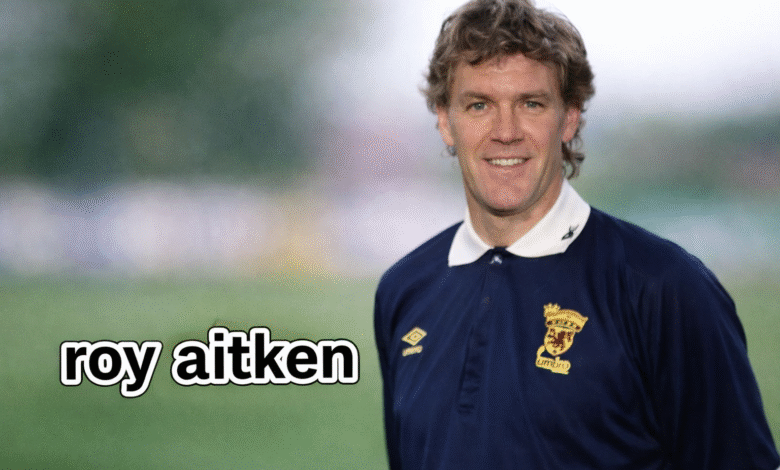
Roy Aitken – The Unbreakable Celtic Leader Who Defined an Era | Triumphs, Challenges, and Lasting Legacy

Introduction
Roy Aitken stands as one of the most respected and influential figures in Scottish football history. Known for his strength, leadership, and unwavering commitment, he built a career that earned admiration across clubs and generations. His journey reflects both the highs of success and the challenges that shaped him into a true professional.
From his early days in Scotland to becoming captain of Celtic F.C., Roy Aitken demonstrated qualities that went beyond talent. His discipline, physical presence, and tactical awareness made him a cornerstone of every team he represented, including the Scotland national football team.
Quick Bio
| Field | Details |
|---|---|
| Full Name | Robert Sime Aitken |
| Date of Birth | 24 November 1958 |
| Age | 67 (as of 2026) |
| Birthplace | Irvine, Scotland |
| Nationality | Scottish |
| Height | 1.83 m (approx.) |
| Position | Defender / Midfielder |
| Famous For | Celtic captain, Scottish international |
| Major Clubs | Celtic, Newcastle United, St Mirren, Aberdeen |
Early Life and Background
Roy Aitken was born in Irvine, a town known for producing hardworking individuals and passionate sports enthusiasts. Growing up in nearby Ardrossan, he developed a strong connection to football at an early age. His environment played a significant role in shaping his disciplined and determined personality.
As a student at St Andrew’s Academy, Aitken balanced education with sports. His early football experiences were grounded in local youth systems, where he learned the basics of teamwork and competition. These formative years built the foundation for a career that would later flourish on some of football’s biggest stages.
Career Beginnings
Roy Aitken began his professional football journey with Celtic F.C. in the mid-1970s. Making his debut at just 16 years old, he quickly stood out for his maturity and physical strength. His early performances suggested that he was destined for a long and impactful career.
His rapid development was not accidental. Aitken worked consistently on improving his skills and understanding of the game. His ability to read matches and adapt to different situations made him a valuable asset even in his teenage years.
Celtic Career – The Golden Years
Rise to Leadership
At Celtic F.C., Roy Aitken evolved from a promising youngster into a commanding leader. Over time, he became the team captain, earning the nickname “The Bear” due to his powerful presence on the pitch. His leadership was not just about authority—it was about leading by example.
Under his captaincy, Celtic experienced significant success. Aitken’s influence extended beyond defensive duties, as he often guided teammates and maintained discipline during high-pressure matches. His ability to remain composed in difficult situations made him indispensable.
Major Achievements
Roy Aitken’s time at Celtic was filled with remarkable accomplishments. He played over 600 matches and contributed to multiple domestic triumphs, including league titles and cup victories. One of his most memorable achievements came during the 1987–88 season, when he captained the team to a historic league and cup double.
These achievements solidified his status as a club legend. His consistency, dedication, and leadership ensured that his name would remain associated with one of Celtic’s most successful eras.
Move to Newcastle United
A New Challenge
In 1990, Roy Aitken moved to Newcastle United F.C., seeking a new challenge in English football. This transition marked a significant step in his career, as he brought his experience and leadership to a different environment.
At Newcastle, he once again took on a leadership role. Although the club faced difficulties during his time there, Aitken’s professionalism and determination were evident. His presence added stability to the team during a challenging period.
Later Playing Career
St Mirren and Aberdeen
After leaving Newcastle, Aitken returned to Scotland and joined St Mirren F.C.. His time there allowed him to continue contributing as an experienced player, guiding younger teammates and maintaining high standards.
He later moved to Aberdeen F.C., where he combined playing with coaching responsibilities. This phase of his career marked the beginning of his transition from player to mentor, showcasing his deep understanding of the game.
International Career
Roy Aitken proudly represented the Scotland national football team between 1979 and 1991. He earned 57 international caps and played in major tournaments, including the 1986 FIFA World Cup and the 1990 FIFA World Cup.
Serving as captain during the 1990 World Cup, Aitken demonstrated leadership on the global stage. His performances reflected his ability to compete at the highest level, representing his country with pride and determination.
Managerial and Coaching Career
Aberdeen Manager
After retiring as a player, Roy Aitken became manager of Aberdeen F.C.. One of his notable achievements was leading the club to victory in the Scottish League Cup during the 1995–96 season. This success highlighted his ability to transition from player to manager effectively.
However, management also brought challenges. Inconsistent league results eventually led to his departure, showing that even experienced leaders face difficult periods in football.
Coaching Roles
Aitken continued his involvement in football through coaching roles at clubs such as Leeds United F.C. and Aston Villa F.C.. He also briefly served as caretaker manager at Aston Villa, further demonstrating his leadership capabilities.
Playing Style and Strengths
Roy Aitken was known for his physical strength, tactical intelligence, and leadership qualities. He could play both as a defender and a midfielder, offering versatility to his teams.
While he was not the fastest player, his positioning and decision-making compensated for any lack of speed. His ability to organize defenses and inspire teammates made him one of the most reliable players of his time.
Legacy
Roy Aitken’s legacy is defined by loyalty, leadership, and consistency. His long service to Celtic F.C. and his contributions to Scottish football have earned him lasting respect.
He is remembered as a player who gave everything on the pitch and upheld the values of teamwork and discipline. His career serves as an example for aspiring footballers, showing that success comes through dedication and resilience.
Conclusion
Roy Aitken’s journey is a powerful story of determination and leadership. From his early days in Scotland to becoming a legendary captain, he consistently demonstrated qualities that define true greatness. While his career included both triumphs and challenges, his impact on football remains undeniable.
His legacy continues to inspire, reminding us that strength is not just physical—it is also about character, commitment, and the ability to lead others.
FAQ
Who is Roy Aitken?
Roy Aitken is a former Scottish professional footballer and manager, best known for his career at Celtic.
What position did Roy Aitken play?
He played primarily as a defender and also as a defensive midfielder.
How many international caps did he earn?
He earned 57 caps for Scotland.
Did Roy Aitken captain any teams?
Yes, he captained Celtic and Scotland, including at the 1990 World Cup.
What is Roy Aitken’s legacy?
He is regarded as one of Celtic’s greatest captains and a respected figure in Scottish football history.