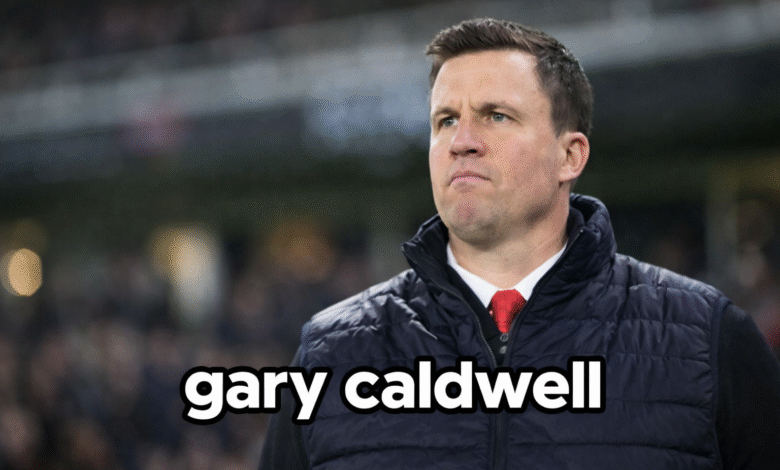
gary caldwell: The Relentless Defender Who Turned Triumph into Leadership — Success, Struggles, and a Lasting Football Legacy

Table of Contents
ToggleIntroduction
Gary Caldwell is a name that quietly commands respect in the world of football. While he may not always dominate headlines like global superstars, his journey reflects something far more powerful—consistency, resilience, and leadership. From his early days in Scotland to lifting one of England’s most prestigious trophies, Caldwell built his reputation through discipline and determination.
His story is not just about victories; it also includes setbacks, challenges, and transitions that shaped his career. Today, as a football manager, Gary Caldwell continues to influence the game, proving that true success is not just about playing at the top level but also about evolving beyond it.
Quick Bio
| Field | Information |
|---|---|
| Full Name | Gary Robert Caldwell |
| Date of Birth | 12 April 1982 |
| Age | 44 (as of 2026) |
| Birthplace | Stirling, Scotland |
| Nationality | Scottish |
| Height | 1.86 m |
| Position | Centre-back |
| Profession | Former Footballer, Football Manager |
Early Life and Background
Gary Caldwell was born in Stirling, Scotland, a place known for its deep-rooted football culture. Growing up in a sporting environment, he was naturally drawn to the game at an early age. His passion for football was not just casual—it quickly became a central part of his identity.
A key influence in his early life was his brother, Steven Caldwell, who also pursued a professional football career. The presence of a sibling with similar ambitions created a competitive yet supportive environment, helping Gary develop both mentally and physically as a young player.
Start of Career
Caldwell began his professional football journey at Newcastle United, where he trained within the club’s youth system. Although breaking into the first team proved challenging, this phase played a crucial role in shaping his understanding of high-level football.
To gain experience, he went on loan to several clubs, including Darlington, Hibernian, Coventry City, and Derby County. These loan spells were not just temporary moves—they were essential stepping stones that helped him mature as a defender and adapt to different playing styles.
Rise to Prominence at Hibernian
Gary Caldwell’s breakthrough came when he joined Hibernian on a permanent basis. At the club, he established himself as a reliable and disciplined centre-back, gaining recognition for his defensive abilities and composure under pressure.
His performances at Hibernian caught the attention of bigger clubs, and it became clear that he was ready for a larger stage. This period marked the transition from a developing player to a recognized professional in Scottish football.
Success with Celtic
In 2006, Caldwell signed with Celtic, one of Scotland’s most successful football clubs. This move proved to be a defining chapter in his career, as he became part of a team competing at the highest level domestically.
During his time at Celtic, he won multiple domestic titles, including league championships and cup competitions. Playing in high-pressure matches helped him refine his leadership skills, and he became known for his ability to organize the defense effectively.
Premier League Journey and FA Cup Glory
Caldwell’s move to Wigan Athletic in 2010 brought him into the English Premier League. Competing in one of the world’s most demanding leagues tested his abilities, but he adapted well and became a consistent performer for the club.
The highlight of his career came in 2013 when Wigan Athletic won the FA Cup. This victory was historic and unexpected, showcasing Caldwell’s role in one of football’s most memorable underdog triumphs. It was a moment that defined his legacy as a player.
International Career with Scotland
Gary Caldwell also had a significant international career, representing Scotland with pride. Over the years, he earned more than 50 caps, demonstrating his consistency and importance to the national team.
One of his most memorable contributions was his performance in key qualification matches, where his defensive strength and occasional goal-scoring ability proved valuable. Representing his country added another layer of prestige to his career.
Playing Style and Strengths
Caldwell was known for his strong defensive awareness and ability to read the game effectively. As a centre-back, he focused on positioning, interceptions, and leadership rather than flashy techniques.
His communication skills on the field made him a natural organizer in defense. Whether playing at club level or internationally, he was trusted to guide teammates and maintain structure, which is a critical quality for any successful defender.
Transition into Management
After retiring from professional football, Gary Caldwell transitioned into management. This shift was not unusual for someone with his understanding of the game, but it required a different set of skills and mindset.
He managed several clubs, including Wigan Athletic, Chesterfield, Partick Thistle, and Exeter City. His managerial career reflects his commitment to football, as he continues to develop teams and implement structured tactical approaches.
Challenges and Setbacks
Like many football professionals, Caldwell’s journey was not without difficulties. Early struggles at Newcastle United, adapting to different leagues, and facing the pressures of management all tested his resilience.
These challenges, however, played a crucial role in shaping his character. Instead of being setbacks, they became learning experiences that strengthened his approach to both playing and coaching.
Leadership and Influence
One of Gary Caldwell’s most defining traits is his leadership. Whether as a player or a manager, he has consistently demonstrated the ability to guide others and maintain discipline within a team.
His leadership style is not based on loud authority but on consistency, professionalism, and understanding of the game. This approach has earned him respect from teammates, players, and football professionals alike.
Legacy in Football
Gary Caldwell’s legacy is built on dedication rather than glamour. He may not be remembered as the most famous player of his era, but he is respected as a reliable defender and a committed professional.
His FA Cup victory with Wigan Athletic remains a historic achievement, symbolizing the power of teamwork and determination. Beyond trophies, his influence continues through his work as a manager.
Conclusion
Gary Caldwell’s career is a powerful reminder that success in football is not always about fame or individual brilliance. It is often about persistence, discipline, and the ability to adapt to change.
From his early struggles to his greatest triumphs, Caldwell has demonstrated what it means to stay committed to one’s craft. As he continues his journey in management, his impact on the game remains strong and meaningful.
FAQs
1. Who is Gary Caldwell?
Gary Caldwell is a Scottish former professional footballer and current football manager known for his role as a centre-back.
2. What is Gary Caldwell famous for?
He is best known for winning the FA Cup with Wigan Athletic and his successful time at Celtic.
3. How many international matches did he play?
He earned over 50 caps for the Scotland national team.
4. What position did Gary Caldwell play?
He primarily played as a centre-back.
5. What is Gary Caldwell doing now?
He is involved in football management, continuing his career in coaching and leadership roles.