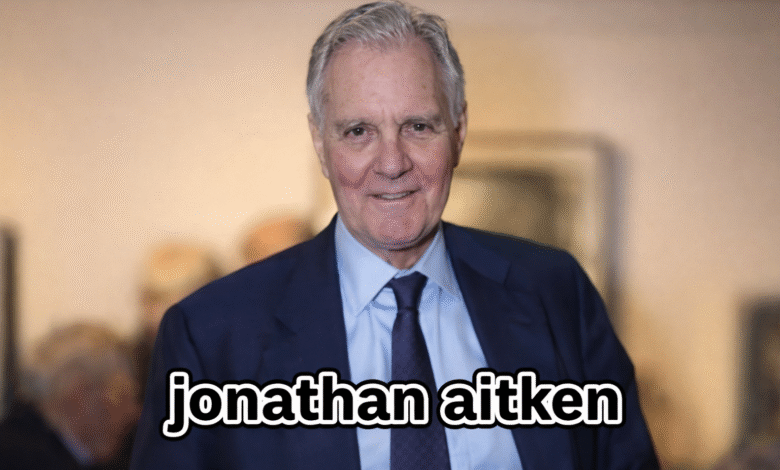
jonathan aitken: From Power and Scandal to Redemption and Purpose

Table of Contents
ToggleIntroduction
Jonathan Aitken is one of the most compelling figures in modern British public life, known for both his political success and dramatic personal downfall. His journey reflects the extremes of ambition, failure, accountability, and ultimately redemption, making his life story both cautionary and inspiring.
From serving in senior government roles to facing imprisonment, Aitken’s life changed in ways few public figures experience. Yet, what makes his story truly powerful is not just the fall, but the transformation that followed, as he rebuilt his life through faith, writing, and public service.
Quick Bio
| Field | Details |
|---|---|
| Full Name | Jonathan William Patrick Aitken |
| Date of Birth | 30 August 1942 |
| Age | 83 years (as of 2026) |
| Birthplace | Dublin, Ireland |
| Nationality | British |
| Religion | Christianity (Anglican) |
| Profession | Former Politician, Author, Anglican Priest |
| Education | Eton College, Christ Church Oxford |
| Children | 4 |
Early Life and Background
Jonathan Aitken was born into a politically influential family, which played a significant role in shaping his future. His father, Sir William Aitken, was a Conservative politician, and this early exposure introduced him to governance, leadership, and public responsibility from a young age.
He grew up in a privileged environment that provided access to elite education and intellectual development. This upbringing not only influenced his confidence but also prepared him for a career in public life, where communication and leadership are essential.
Education and Intellectual Foundation
Aitken received his education at Eton College, one of the most prestigious schools in the United Kingdom. This institution has produced many influential leaders, and it helped shape his academic discipline and social connections.
He later attended Christ Church, Oxford, where he studied law. His time at Oxford refined his analytical thinking and communication skills, both of which became crucial in his later roles as a politician and public speaker.
Early Career in Journalism
Before entering politics, Aitken began his professional journey in journalism. He worked as a journalist and war correspondent, gaining firsthand experience of international affairs and conflict situations.
This early career phase allowed him to develop a deep understanding of global politics and sharpen his writing abilities. It also helped him build a public profile, which later supported his transition into political life.
Political Career and Rise to Power
Jonathan Aitken entered British politics in 1974 as a member of the Conservative Party. He served as a Member of Parliament for several decades, representing Thanet East and later South Thanet.
During the leadership of John Major, Aitken held significant government positions, including Minister for Defence Procurement and Chief Secretary to the Treasury. These roles placed him at the center of national decision-making and economic planning.
Crisis, Scandal, and Downfall
Despite his success, Aitken’s career took a dramatic turn in the mid-1990s. A legal battle with The Guardian became a turning point that exposed serious issues in his conduct.
The case ultimately led to his conviction for perjury and perverting the course of justice in 1999. This marked a complete collapse of his political career, transforming him from a powerful public figure into a symbol of political scandal.
Imprisonment and Personal Reflection
Aitken was sentenced to prison and served several months behind bars. This period proved to be one of deep personal reflection and transformation, as he reassessed his values and life choices.
During his time in prison, he turned towards faith and began studying the Bible. This spiritual awakening became the foundation for the next chapter of his life, changing his perspective on success, failure, and purpose.
Transformation and Religious Calling
After his release, Aitken pursued theological studies and eventually became an ordained priest in the Church of England. This transition marked a significant shift from political power to spiritual service.
He began working as a prison chaplain, helping inmates with rehabilitation and personal growth. His own experiences allowed him to connect deeply with others facing similar struggles, making his work both meaningful and impactful.
Writing Career and Public Influence
Jonathan Aitken also established himself as a respected author and speaker. His books, including his autobiography and reflections on prison life, provide insight into his personal journey and lessons learned.
In addition, he wrote biographies of major political figures such as Richard Nixon and Margaret Thatcher. Through writing and public speaking, he continues to contribute to discussions on leadership, ethics, and redemption.
Legacy and Lasting Impact
Aitken’s life is often described as a powerful example of rise, fall, and redemption. His story highlights the consequences of poor decisions but also the possibility of personal transformation and growth.
He is remembered not only for his political career but also for his ability to rebuild his life after failure. This dual legacy makes him a unique and thought-provoking figure in modern history.
Conclusion
Jonathan Aitken’s journey is a rare combination of success, controversy, and redemption. His life teaches important lessons about integrity, accountability, and the potential for change, even after serious mistakes.
From government offices to prison cells and finally to places of spiritual service, his story remains a powerful reminder that true strength lies not in avoiding failure, but in rising again with purpose and humility.
FAQs
Who is Jonathan Aitken?
Jonathan Aitken is a former British politician who later became an author and Anglican priest after serving a prison sentence.
What is Jonathan Aitken known for?
He is known for his political career, a major legal scandal, and his later transformation into a religious figure and prison chaplain.
What happened to his political career?
His political career ended after his conviction in 1999 for perjury and related offenses.
What does he do now?
He works in religious service and is involved in prison ministry and public speaking.
What can we learn from his life?
His life teaches lessons about accountability, resilience, and the power of personal transformation.