ian kershaw: The Brilliant Yet Unflinching Historian Who Revealed the Dark Truths of Nazi Germany

Introduction
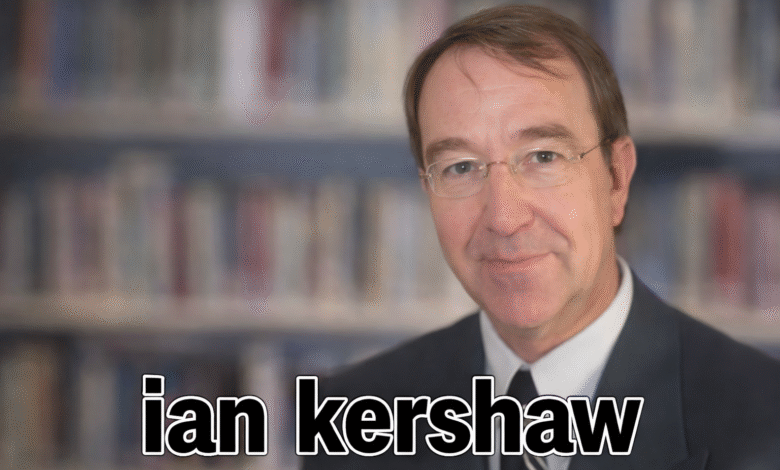
Ian Kershaw is widely recognized as one of the most influential historians of modern Europe. His work on Nazi Germany and Adolf Hitler has shaped how the world understands one of the darkest periods in human history. His writing is both powerful and deeply analytical, offering clarity without ignoring the harsh realities of dictatorship.
What makes ian kershaw stand out is his ability to combine academic precision with human understanding. He does not simply present facts; he explains how societies function under extreme political pressure. His work challenges readers to think critically about leadership, power, and responsibility.
Quick Bio
| Field | Details |
|---|---|
| Full Name | Sir Ian Kershaw |
| Date of Birth | 29 April 1943 |
| Age | 82 years (as of 2026) |
| Birthplace | Oldham, Lancashire, England |
| Nationality | British |
| Profession | Historian, Author |
| Education | University of Liverpool; University of Oxford |
| Spouse | Dame Betty Kershaw |
| Children | Two |
Early Life and Background
Ian kershaw was born in Oldham, a town in Lancashire, England, during a time when Europe was still recovering from World War II. Growing up in a working-class environment, he was surrounded by real stories of struggle and change. These early experiences helped shape his interest in understanding history at a deeper level.
His education at St Bede’s College in Manchester played a key role in guiding his intellectual direction. A passionate teacher inspired him to look beyond textbooks and explore the meaning behind historical events. This curiosity would later become the foundation of his academic success.
Education and Academic Development
Kershaw pursued higher education at the University of Liverpool, where he developed strong analytical skills. Initially, his focus was not on modern history but on medieval studies, particularly economic and social aspects of monastic life. This background gave him a unique perspective on long-term historical patterns.
He later completed his doctorate at Merton College, University of Oxford. His academic training was rigorous and deeply research-oriented. Although his early work focused on medieval history, it equipped him with the tools needed to examine complex historical systems in any period.
Transition to Modern History
A turning point in ian kershaw’s career came during the 1970s when he visited Germany. During this visit, he encountered individuals who still expressed sympathy for Nazi ideology. This experience shocked him and raised important questions about how ordinary people could support such a regime.
This moment pushed him to shift his academic focus from medieval history to modern German history. He became determined to understand not only Adolf Hitler but also the society that enabled his rise. This transition marked the beginning of his most important contributions to historical scholarship.
Career Overview
Kershaw’s academic career began at the University of Manchester, where he taught for nearly two decades. His work during this period gained attention for its depth and originality. He later held positions at the University of Nottingham and the University of Sheffield.
At the University of Sheffield, he served as Professor of Modern History until his retirement in 2008. His teaching career was marked by dedication and influence, shaping generations of students. Even after retirement, he continued writing and contributing to historical discussions.
Major Works and Achievements
Ian kershaw is best known for his detailed and balanced analysis of Nazi Germany. His books are widely respected for their accuracy and insight. Among his most notable works are Hitler: 1889–1936: Hubris and Hitler: 1936–1945: Nemesis.
These two volumes are considered among the most authoritative biographies of Adolf Hitler. They combine extensive research with clear storytelling, making complex historical events accessible to readers. His other works also explore broader European history and political developments.
Key Ideas and Contributions
One of the most important concepts introduced by ian kershaw is “working towards the Führer.” This idea explains how individuals in Nazi Germany acted based on what they believed Hitler wanted, even without direct orders.
This concept highlights the role of ordinary people in shaping historical events. It shows that systems of power are not built by leaders alone but by the actions of many individuals. His work encourages readers to reflect on responsibility within society.
Writing Style and Influence
Kershaw’s writing style is clear, engaging, and deeply analytical. He avoids unnecessary complexity while still maintaining academic rigor. This balance makes his work accessible to both scholars and general readers.
His influence extends beyond academia. His books are used in universities around the world, and his ideas are frequently discussed in media and public debates. He has helped bring historical understanding to a wider audience.
Awards and Recognition
Throughout his career, ian kershaw has received numerous awards and honors. He was knighted in 2002 for his contributions to history. This recognition reflects the importance of his work on a global scale.
He has also received prestigious prizes such as the Wolfson History Prize and the British Academy Book Prize. These awards highlight the quality and impact of his research. His achievements continue to inspire historians and students alike.
Later Work and Continued Impact
After retiring from full-time teaching, kershaw continued to write and publish important works. His later books focus on broader European history, examining the political and social changes of the twentieth century.
His continued work shows that his passion for history remains strong. Even in later years, he contributes valuable insights that help readers understand the modern world. His voice remains relevant in discussions about leadership and society.
Legacy
The legacy of ian kershaw is both powerful and lasting. He has transformed the way historians study Nazi Germany by focusing not only on leaders but also on society as a whole. His work provides a deeper understanding of how history unfolds.
His influence goes beyond historical research. His ideas encourage critical thinking about power, responsibility, and human behavior. This makes his work important not only for historians but for anyone interested in understanding the world.
Conclusion
Ian kershaw stands as a remarkable figure in modern historical scholarship. His work is both inspiring and challenging, offering insight into one of the most complex periods in history. While his research exposes uncomfortable truths, it also provides valuable lessons for the future.
His dedication, clarity, and intellectual courage have earned him a place among the most respected historians of his time. His legacy will continue to shape historical understanding for generations to come.
FAQs
Q1: Who is ian kershaw?
Ian kershaw is a British historian known for his research on Nazi Germany and Adolf Hitler.
Q2: What is ian kershaw famous for?
He is best known for his two-volume biography of Adolf Hitler.
Q3: What did he study first?
He initially studied medieval history before focusing on modern German history.
Q4: Has he received any major awards?
Yes, he has received several awards and was knighted in 2002.
Q5: Why is his work important?
His work helps explain how societies function under dictatorship and how individuals contribute to historical events.