Philip Barantini: The Journey of a Visionary Filmmaker Who Revolutionized British Cinema

Introduction
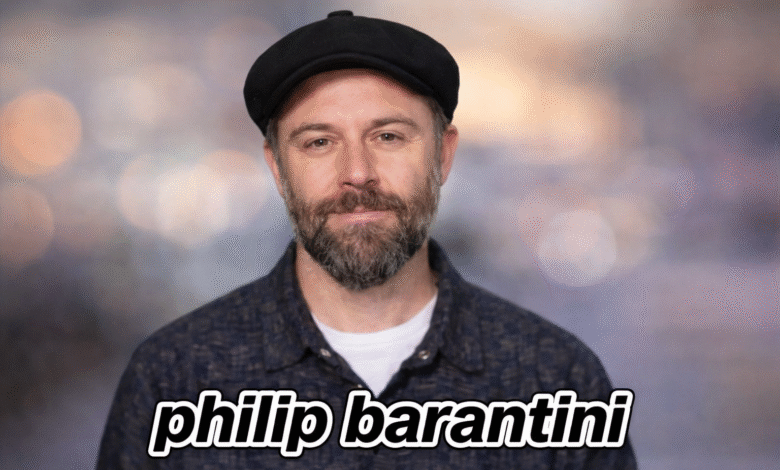
Philip Barantini has emerged as one of the most exciting and influential filmmakers in the contemporary British cinema scene. Known for his visionary approach to storytelling, Barantini gained widespread recognition for his breakthrough work in Boiling Point, a film that was not only a critical success but also a game-changer in terms of filmmaking technique. Shot in one continuous take, Boiling Point showcased his unique ability to create tension, drama, and realism, making him a standout talent in the world of film direction.
Though his path to success has been marked by hard work, determination, and continuous learning, Barantini’s rise to prominence has not been without challenges. His evolution from a TV actor to a celebrated director is a testament to his adaptability, perseverance, and dedication to his craft. In this article, we explore Barantini’s journey, his creative process, his influence on the film industry, and the lasting legacy he is building with each new project.
Quick Bio of Philip Barantini
| Attribute | Details |
|---|---|
| Full Name | Philip Barantini |
| Date of Birth | 13 July 1980 |
| Age | 45 (as of 2026) |
| Nationality | British |
| Birthplace | Liverpool, Merseyside, England |
| Ethnicity | White (English) |
| Career | Actor, Director, Producer, Screenwriter |
| Notable Work | Boiling Point (2021), Villain (2020) |
| Awards | BIFA Nominations, BAFTA Nominations |
| Height | 5’9″ (175 cm) |
| Net Worth | Estimated between $1M – $5M (unverified) |
Early Life and Education
Born on July 13, 1980, in Liverpool, England, Philip Barantini grew up in the nearby area of Huyton. From a young age, he was captivated by the world of entertainment, developing an early interest in acting. Though he didn’t attend film school, Barantini learned the craft of filmmaking through his experiences on set as an actor and later as a director. His early exposure to the industry through roles in British TV series like Dream Team and Band of Brothers gave him invaluable insight into the workings of film and television production. These formative years were pivotal, helping shape his understanding of character development, storytelling, and the power of visual narrative.
Barantini’s journey into filmmaking wasn’t a traditional one, but rather a series of pivotal decisions that led him to where he is today. While studying the craft informally, he honed his skills by shadowing directors, learning through the experiences of others. His career as an actor would eventually give way to his true passion: directing.
The Transition from Actor to Director
Philip Barantini’s decision to leave acting and focus on directing was not a sudden one. After years of working as an actor in a variety of roles, including his standout performance in Band of Brothers, Barantini realized that his true calling lay behind the camera. This transition was driven by his desire to create his own narratives and guide the vision of others.
His directorial debut, Villain (2020), marked the beginning of his journey as a filmmaker. While it was not an instant commercial success, it demonstrated Barantini’s talent and set the stage for greater things to come. However, it was his next project, Boiling Point (2021), that truly catapulted him into the spotlight. The film, which was shot in a single continuous take, garnered widespread critical acclaim and was praised for its innovative approach to storytelling. It was a testament to Barantini’s skill in building tension and drama in real time, all while maintaining a seamless narrative flow.
Boiling Point: A Game-Changing Film
Boiling Point was more than just a film—it was a statement. Shot in one continuous take, the film follows the chaos of a high-pressure night in a restaurant kitchen, capturing the frenetic energy and underlying tension that accompanies such a demanding environment. The film starred Stephen Graham, a longtime collaborator of Barantini, and was lauded for its realism, suspense, and raw performances.
The film’s unconventional format allowed Barantini to create an immersive experience for the audience, placing them directly in the action. This technique, though difficult to pull off, became a hallmark of his style. Critics and audiences alike were captivated by the intensity of the film, making it one of the most talked-about films of the year. The film’s success at film festivals, including its screening at the BFI London Film Festival, helped solidify Barantini’s reputation as a master storyteller and innovative director.
The Impact of Barantini’s Directing Style
Barantini’s style of directing has set him apart in an industry full of talented filmmakers. His use of real-time storytelling, particularly in the one-take format, has become a defining characteristic of his work. The continuous take in Boiling Point was not just a technical achievement but also a creative choice that deepened the emotional stakes of the story. It required meticulous planning, rehearsals, and coordination to ensure that the story flowed seamlessly from start to finish without interruption.
His ability to craft tension through both visual and narrative choices has been praised by critics and filmmakers alike. His focus on performance-driven storytelling, where the character’s emotions are central to the story’s unfolding, has earned him accolades and a devoted following.
Barantini’s Future Projects
After the success of Boiling Point, Barantini has expanded his horizons, taking on more ambitious projects. One of his upcoming projects is the TV adaptation of Boiling Point, which will be released as a four-part series. This project allows Barantini to explore the characters and world he created on a deeper level, further immersing audiences in the chaotic life of a restaurant kitchen.
Barantini is also set to direct Enola Holmes 3 (2025), which will bring his signature style to a larger-scale production. As a director known for his mastery of tension and real-time action, his move to direct more mainstream films will be closely watched by both fans and critics. Additionally, he is also working on a new drama series titled Adolescence, further cementing his reputation as a versatile filmmaker who can work across different genres.
Conclusion
Philip Barantini’s rise in the film industry has been nothing short of remarkable. From his beginnings as a TV actor to his current status as a pioneering director, Barantini has carved out a unique place for himself in the world of filmmaking. His work, particularly Boiling Point, has not only garnered critical acclaim but has also pushed the boundaries of what is possible in cinema, especially in terms of real-time storytelling.
Barantini’s work continues to inspire and captivate audiences, and with his upcoming projects, it’s clear that his journey is far from over. His ability to create immersive, performance-driven narratives ensures that his influence on the industry will be felt for years to come.
FAQ
1. What is Philip Barantini’s most famous film?
Barantini’s most famous film is Boiling Point (2021), a critically acclaimed drama shot in a single continuous take. It received widespread recognition for its innovative filmmaking style.
2. What makes Philip Barantini’s directing style unique?
Barantini’s directing style is known for its use of real-time storytelling, especially in films like Boiling Point, where the narrative unfolds without cuts, heightening the tension and realism of the story.
3. Has Philip Barantini directed any TV series?
Yes, Barantini directed the Boiling Point TV series (2023), a continuation of his successful film. He has also worked on other TV projects such as The Responder and Malpractice.
4. What other projects is Philip Barantini working on?
Barantini is working on Enola Holmes 3 (2025) and Adolescence, a drama series set to premiere on Netflix. He continues to explore new ways to innovate in both film and television.
5. What are the key themes in Philip Barantini’s work?
Barantini often explores themes of tension, high-pressure environments, and the emotional complexity of his characters. His work is known for its intense focus on performance and real-time drama.