Nicholas Witchell: The Legendary BBC Royal Correspondent Who Defined Modern Journalism

Introduction
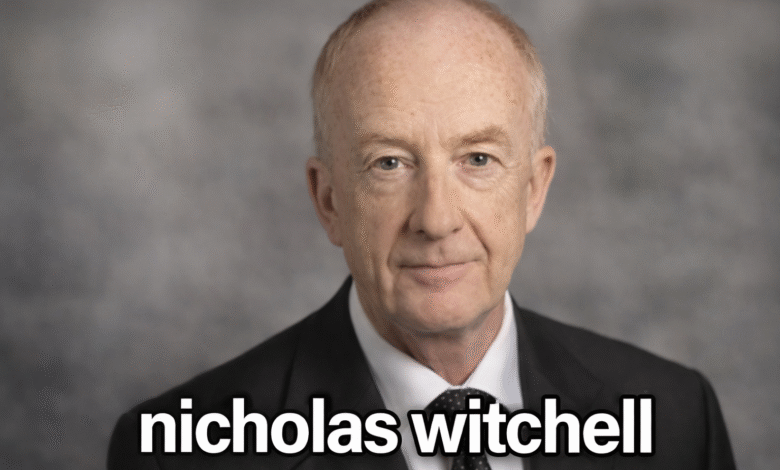
Nicholas Witchell has been a defining figure in British journalism for nearly five decades. Known for his meticulous reporting and unwavering professionalism, Witchell has witnessed and reported some of the most historic events of the modern era, from major conflicts to royal milestones. His dedication to accurate and responsible reporting has made him a household name, particularly in the realm of royal coverage.
Throughout his career, Witchell has experienced both praise and criticism, navigating the challenges of live reporting with grace and authority. His work exemplifies the balance between maintaining journalistic integrity and engaging a broad audience.
Quick Bio of Nicholas Witchell
| Attribute | Details |
|---|---|
| Full Name | Nicholas Newton Henshall Witchell |
| Date of Birth | 23 September 1953 |
| Age | 72 (2026) |
| Birth Place | Cosford, Shropshire, England |
| Nationality | British |
| Education | Epsom College, University of Leeds (Law) |
| Occupation | Journalist, Broadcaster |
| Known For | BBC Royal Correspondent |
| Years Active | 1976–2024 |
| Marital Status | Married to Maria Staples |
| Children | Two daughters |
Early Life and Education
Nicholas Witchell was born in Cosford, Shropshire, into a family that instilled the values of discipline and responsibility. From an early age, he showed a keen interest in writing and current affairs, which ultimately led him to a career in journalism. His upbringing in Shropshire provided a quiet, focused environment where Witchell could cultivate his curiosity about the world.
He attended Epsom College, where he excelled academically and began to develop the communication skills that would later define his professional life. Witchell then pursued a degree in law at the University of Leeds, balancing his studies with an active role in student journalism. Editing the university newspaper gave him an early taste of reporting, storytelling, and the challenges of delivering news to a broad audience.
The Beginning of a Remarkable Career
In 1976, Nicholas Witchell joined the BBC as a graduate trainee. Early in his career, he reported from Northern Ireland during a period of political unrest, covering highly sensitive events such as the assassination of Lord Mountbatten. These formative experiences helped him develop a reputation for composure under pressure, a quality that would become a hallmark of his professional life.
By the early 1980s, Witchell transitioned into television news reporting, covering significant global events including the Falklands War. His ability to combine factual reporting with clear communication quickly distinguished him among his peers. The early challenges he faced in conflict zones taught him the importance of accuracy and impartiality, values that guided his entire career.
Rise as a News Presenter
Nicholas Witchell gained national prominence in 1984 when he became one of the first presenters of the BBC Six O’Clock News. This role allowed him to showcase his journalistic skills to a wide audience while building trust as a reliable source of information.
Later, Witchell also presented BBC Breakfast News, covering both national and international events. From disasters to political upheavals, his reporting combined clarity, urgency, and professionalism. Although live reporting can be unpredictable, Witchell’s composure ensured that audiences received accurate updates, earning him respect across the industry.
Becoming the BBC Royal Correspondent
In 1998, Nicholas Witchell assumed the role of BBC Royal Correspondent, a position he would hold for more than 25 years. His reporting covered the British Royal Family during some of the most significant moments in recent history, including the death of Princess Diana and the transition from Queen Elizabeth II to King Charles III.
As Royal Correspondent, Witchell faced unique challenges. Balancing public interest with respect for privacy required not only journalistic skill but also sensitivity. While some criticized his direct reporting style, others praised his unwavering commitment to accuracy and context. His work shaped the way the British public perceives royal events and set a standard for future royal reporting.
Professional Achievements and Legacy
Nicholas Witchell’s career is defined by consistency, reliability, and depth of experience. Over nearly five decades, he reported on historic conflicts, royal milestones, and national tragedies, earning recognition as one of Britain’s most trusted journalists.
His legacy is twofold: first, as a reporter who maintained high ethical standards in journalism; second, as a mentor and role model for aspiring journalists. Witchell’s approach to reporting demonstrates the importance of preparation, accuracy, and calmness under pressure—qualities that aspiring journalists continue to study and emulate.
Challenges and Controversies
Despite his respected status, Witchell’s career was not without challenges. Live reporting occasionally brought unexpected moments, and covering the Royal Family often attracted public scrutiny. Some events, such as on-camera tensions during royal announcements, drew criticism, but Witchell’s professionalism consistently ensured that these moments did not overshadow his journalistic integrity.
These challenges highlight the dual nature of his career: it was both rewarding and demanding. While public attention could be intense, Witchell’s ability to maintain composure and credibility reinforced his position as a leading journalist.
Retirement and Recent Developments
In 2023, Nicholas Witchell announced his retirement from the BBC after an illustrious 47-year career. He officially stepped down in March 2024, concluding a remarkable tenure marked by dedication, professionalism, and journalistic excellence.
His retirement was widely covered in media outlets, celebrating a career that had informed and influenced generations of viewers. The BBC acknowledged Witchell’s contributions as a cornerstone of its news coverage, particularly in the realm of royal reporting.
Conclusion
Nicholas Witchell’s career exemplifies dedication, resilience, and professionalism in journalism. From reporting in conflict zones to becoming a trusted voice on royal affairs, he has shaped British news reporting in profound ways. His work demonstrates that journalism is not just about reporting events but about providing context, insight, and trust to the audience.
Witchell’s influence will continue to be felt in the industry for years to come. Aspiring journalists can learn from his careful balance of accuracy, composure, and respect for the people and events he covered.
FAQs
Q1: Who is Nicholas Witchell?
A: Nicholas Witchell is a veteran British journalist who served as BBC Royal Correspondent for over 25 years.
Q2: When did Nicholas Witchell retire?
A: He announced his retirement in 2023 and officially stepped down from the BBC in March 2024.
Q3: What is Nicholas Witchell’s educational background?
A: He studied law at the University of Leeds and was actively involved in student journalism.
Q4: What major events did Nicholas Witchell cover?
A: He reported on events such as the Falklands War, the death of Princess Diana, royal weddings, and national disasters.
Q5: Why is Nicholas Witchell considered influential?
A: Witchell’s reporting set a high standard for accuracy and professionalism in British journalism, especially in royal coverage.