Marc Chalamet: A Powerful Portrait of a Respected Journalist Behind a Global Icon

Introduction
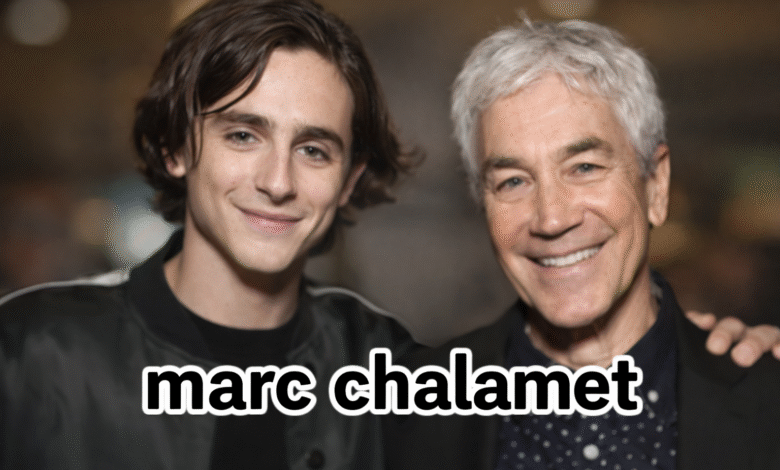
Marc Chalamet is widely recognized as the father of world-famous actor Timothée Chalamet, but reducing his identity to that single connection would be both incomplete and unfair. Marc Chalamet has built a long, disciplined career in international journalism, editorial leadership, and global communication—largely away from the spotlight. His professional life reflects commitment, consistency, and credibility rather than celebrity.
At the same time, Marc Chalamet represents a contrast often seen in public families: while his children operate in the glare of global media, he has deliberately maintained a low public profile. This distance from fame is a strength for some and a limitation for others, yet it defines the grounded, principled nature of his career. His story is one of substance over spectacle.
Quick Bio
| Field | Details |
|---|---|
| Full Name | Marc Chalamet |
| Year of Birth | 1953 |
| Birthplace | Nîmes, France |
| Nationality | French, American |
| Profession | Journalist, Editor, Correspondent |
| Education | Political Science (Sciences Po Lyon) |
| Known For | International journalism, editorial work |
| Spouse | Nicole Flender |
| Children | Pauline Chalamet, Timothée Chalamet |
Early Life and Background
Marc Chalamet was born in 1953 in Nîmes, a historic city in southern France known for its deep cultural roots and intellectual tradition. Growing up in France during a period of political and social transformation, he was exposed early to public affairs, global perspectives, and the importance of informed discourse. These formative influences would later shape his professional direction.
His upbringing emphasized education, language, and cultural awareness. Unlike many public figures whose early lives are extensively documented, Marc’s youth remains largely private. This absence of personal exposure is not a weakness but rather an indicator of a life oriented toward professional integrity instead of personal publicity.
Education and Intellectual Foundation
Marc Chalamet pursued higher education in political science at the Institut d’Études Politiques de Lyon, commonly known as Sciences Po Lyon. Graduating in 1976, he acquired a strong analytical foundation in governance, international relations, and policy analysis. This academic background proved essential for a career that would later involve interpreting complex global issues for diverse audiences.
His education reflects a clear intellectual discipline. While some journalists enter the field through creative writing or broadcasting, Marc’s path was rooted in structured political analysis. This background contributed to his reputation as a serious, fact-oriented professional rather than a personality-driven media figure.
Start of Career in Journalism
Marc Chalamet began his career in journalism in France, working within professional news environments that demanded accuracy, restraint, and reliability. One of his early professional associations included journalistic work connected to international reporting, where clarity and neutrality were essential.
This stage of his career was marked by steady growth rather than rapid visibility. While such an approach may limit public recognition, it strengthens credibility. Marc’s early career reflects patience and long-term thinking—qualities that are increasingly rare in modern media cycles.
Professional Growth and International Reporting
As his career developed, Marc Chalamet expanded his work into international journalism, eventually relocating to the United States. He served as a New York-based correspondent for a major French newspaper, reporting on American political, social, and cultural developments for a French readership.
This role required more than language fluency. It demanded cultural translation—the ability to explain one society to another without distortion. Marc’s bicultural experience positioned him well for this responsibility, though the role also required constant balance between interpretation and objectivity.
Editorial Work and Global Institutions
Beyond newspaper correspondence, Marc Chalamet worked as a writer and editor for international organizations, including UNICEF. In these roles, he contributed to institutional communication, policy-related content, and editorial standards for a global audience.
Working within international institutions carries both strengths and constraints. On one hand, it offers global reach and purpose; on the other, it limits personal expression. Marc’s career reflects a willingness to accept these constraints in service of clarity, responsibility, and public value.
Business Venture and Independent Media
In 1987, Marc Chalamet founded an independent news agency, demonstrating entrepreneurial initiative within journalism. Establishing and running a news organization requires not only editorial skill but also operational discipline, strategic planning, and resilience.
This venture highlights a more independent side of his professional identity. While not widely publicized, it represents a willingness to take professional risks and build platforms rather than simply contribute to existing ones. The limited public documentation of this venture underscores his consistent preference for substance over self-promotion.
Personal Life and Family Values
Marc Chalamet is married to Nicole Flender, a former Broadway dancer who later transitioned into real estate. Together, they raised their children in New York City, providing a culturally rich, bilingual environment that emphasized education, creativity, and independence.
As a father, Marc is often described as supportive but not intrusive. This balance—encouraging ambition without imposing expectation—can be difficult to achieve. While his children’s success has brought indirect public attention, Marc has remained notably reserved, reinforcing his identity as a professional first, public figure second.
Public Perception and Media Presence
Unlike many parents of high-profile celebrities, Marc Chalamet has not leveraged his family connection for visibility. This choice earns respect among professionals but may frustrate audiences seeking personal narratives or dramatic backstories.
This restraint is both positive and limiting. It preserves credibility and privacy but reduces public familiarity. In an era where exposure often equates to influence, Marc’s career stands as a reminder that impact does not always require attention.
Conclusion
Marc Chalamet’s life reflects a quiet but meaningful contribution to journalism and global communication. His career demonstrates that professionalism, consistency, and ethical restraint still matter, even in a media landscape dominated by speed and spectacle. While he may never be a household name on his own, his influence is real—shaped through words, institutions, and values rather than headlines.
His story is not one of dramatic rise or public controversy, but of steady purpose. That may not appeal to everyone, but it is precisely what makes his legacy credible, durable, and worth understanding.
Frequently Asked Questions (FAQ)
Who is Marc Chalamet?
Marc Chalamet is a French-American journalist and editor known for his work in international reporting and editorial roles, as well as for being the father of actors Pauline and Timothée Chalamet.
Where was Marc Chalamet born?
He was born in Nîmes, France.
What is Marc Chalamet’s profession?
He is a journalist, editor, and former foreign correspondent with experience in international media and global institutions.
What is Marc Chalamet’s educational background?
He studied political science at Sciences Po Lyon and graduated in 1976.
Is Marc Chalamet active on social media?
No, he maintains a very private life and does not have a public social media presence.
What is Marc Chalamet’s legacy?
His legacy lies in professional journalism, cross-cultural communication, and a disciplined approach to media that values accuracy over attention.