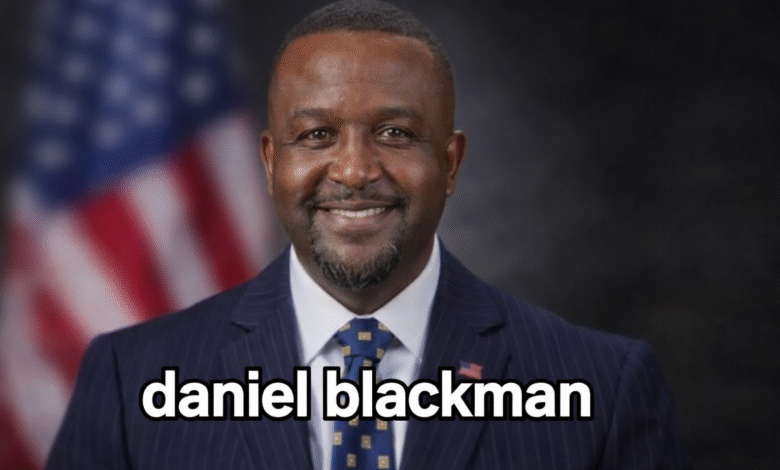
daniel blackman Biography – A Powerful Journey of Leadership, Advocacy, and Environmental Justice

Introduction
Daniel Blackman is a prominent American leader known for his work in environmental justice, civil rights advocacy, and public service. His career reflects a strong commitment to fairness, sustainability, and community empowerment. Through decades of advocacy and leadership roles, he has built a reputation as a determined reformer who connects social justice values with environmental and energy policy.
While Daniel Blackman is widely respected for his vision and public service, his journey has not been without challenges. Supporters praise his courage and dedication, while critics point to the political resistance that often comes with reform-driven leadership. Together, these positive and negative realities shape a realistic and powerful portrait of his life and career.
Quick Bio
| Field | Information |
|---|---|
| Full Name | Daniel A. Blackman |
| Birthplace | Boston, Massachusetts, United States |
| Nationality | American |
| Family Background | Son of immigrants from Barbados |
| Marital Status | Married |
| Children | Four |
| Education | Clark Atlanta University |
| Profession | Environmental Justice Advocate, Public Servant, Author |
| Known For | EPA Leadership, Civil Rights & Environmental Advocacy |
Early Life and Family Background
Daniel Blackman was born in Boston, Massachusetts, into a family shaped by discipline, service, and global awareness. His parents immigrated to the United States from Barbados, bringing with them strong values centered on responsibility, education, and public contribution. Growing up in a military-influenced household, he learned early the importance of structure, accountability, and service to others.
His father served as a U.S. Army Ranger, while his mother supported the family as an Army spouse. This environment exposed Daniel Blackman to leadership principles at a young age. These formative experiences played a crucial role in shaping his worldview and later commitment to public service and justice-oriented work.
Education and Intellectual Development
Daniel Blackman attended Clark Atlanta University, one of the most respected historically Black universities in the United States. His academic environment placed him at the center of intellectual thought, civic engagement, and cultural awareness. During his time there, he was exposed to civil rights history not just through books, but through direct mentorship.
His education went beyond the classroom. Interactions with seasoned leaders and activists helped refine his understanding of justice, policy, and leadership. This period strengthened his belief that sustainable progress requires both moral conviction and practical policy solutions.
Start of Career and Early Advocacy
Daniel Blackman began his professional journey in public policy and advocacy, focusing on environmental fairness and civil rights. Early in his career, he worked closely with lawmakers, community leaders, and grassroots organizations to address inequality in energy access and environmental protection.
This phase of his career established him as a serious policy advocate rather than a symbolic activist. However, working within political systems also exposed him to resistance and slow-moving bureaucratic processes. These challenges sharpened his strategic thinking and strengthened his resolve to push for long-term change.
Environmental Justice and Civil Rights Leadership
As his influence grew, Daniel Blackman became a recognized voice in environmental justice movements. He emphasized that environmental harm often affects marginalized communities disproportionately, linking pollution, energy costs, and health outcomes to civil rights issues.
While many praised his ability to connect environmental policy with social justice, critics sometimes viewed his approach as too reform-focused for traditional systems. Despite this, his leadership helped elevate environmental justice from a niche issue to a mainstream policy discussion.
Federal Government Service
Daniel Blackman’s career reached a major milestone when he was appointed as a Regional Administrator at the U.S. Environmental Protection Agency. In this role, he oversaw environmental programs across multiple southeastern states, focusing on clean air, water protection, and infrastructure investment.
Serving in federal government brought both authority and scrutiny. Supporters viewed his leadership as a necessary step toward equity-driven environmental policy. At the same time, political pressures and regulatory debates highlighted the complexity of balancing innovation with compliance in government service.
Political Career and Public Campaigns
Daniel Blackman also entered the political arena by running for the Georgia Public Service Commission. His campaigns centered on energy affordability, consumer protection, and accountability within utility regulation. These efforts positioned him as a candidate focused on everyday economic realities.
Political campaigns, however, are rarely smooth. While his message resonated with many voters, structural and legal challenges demonstrated the harsh realities of electoral politics. These experiences did not erase his influence but rather added depth to his public profile.
Business Ventures and Organizational Leadership
Beyond government and politics, Daniel Blackman has been active in nonprofit and advisory leadership. He founded Renaissance94, an organization dedicated to climate resilience, sustainability, and community empowerment. Through this platform, he explored innovative approaches to social impact.
His involvement with renewable energy and sustainability organizations reflects a forward-looking mindset. While balancing advocacy and business leadership can be complex, his work demonstrates an effort to align ethical values with practical solutions.
Authorship and Thought Leadership
Daniel Blackman is the author of the book Nationalism Without Compassion, which examines American identity, moral responsibility, and unity. The book reflects his belief that leadership must balance national interests with empathy and justice.
As a thought leader, his ideas have sparked both admiration and debate. Supporters appreciate his honesty and depth, while critics question whether idealism can always translate into policy. This contrast underscores the influence of his voice in national conversations.
Legacy and Impact
Daniel Blackman’s legacy lies in his ability to bridge civil rights principles with environmental and energy policy. He has helped shift conversations toward equity, sustainability, and accountability at both state and federal levels.
At the same time, his career shows that meaningful change often attracts resistance. The challenges he has faced highlight the difficulty of reform in established systems. Still, his long-term impact continues to inspire future leaders in public service.
Conclusion
Daniel Blackman represents a modern form of leadership that blends advocacy, governance, and ethical responsibility. His life demonstrates that progress requires persistence, courage, and the willingness to face criticism. While not every effort has resulted in immediate success, his contributions remain significant.
Through education, advocacy, government service, and thought leadership, Daniel Blackman has left a clear mark on environmental justice and civil rights discussions. His story is one of ambition, challenge, and continued relevance in shaping a more equitable future.
Frequently Asked Questions
Who is Daniel Blackman?
Daniel Blackman is an American environmental justice advocate, public servant, and author known for his leadership in environmental and civil rights policy.
Where was Daniel Blackman born?
He was born in Boston, Massachusetts, United States.
What is Daniel Blackman known for?
He is known for environmental justice advocacy, leadership at the U.S. Environmental Protection Agency, and public policy work.
Is Daniel Blackman married?
Yes, Daniel Blackman is married and has four children.
What book did Daniel Blackman write?
He authored Nationalism Without Compassion, a book focused on American identity and moral leadership.