charles munger jr – A Powerful Force Behind Electoral Reform and Civic Integrity

Introduction
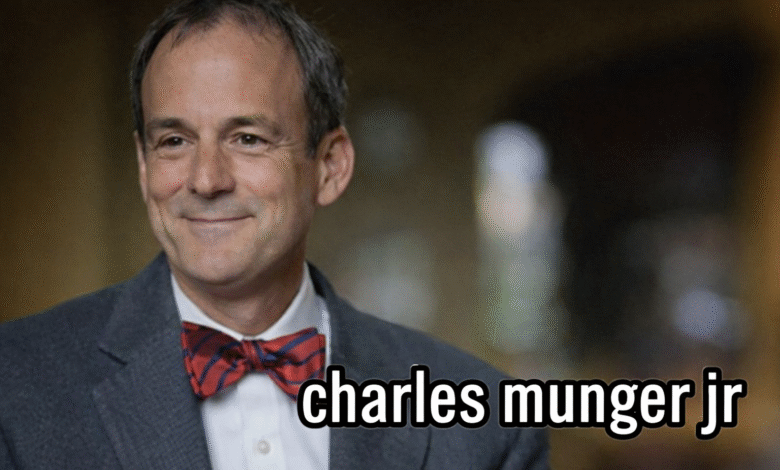
Charles Munger Jr. is a figure who commands respect not through celebrity or corporate headlines, but through sustained influence in the background of American civic life. Known primarily for his work in political reform and his commitment to improving democratic systems, he represents a rare blend of scientific discipline and civic responsibility. While many public figures seek visibility, Charles Munger Jr. has chosen a path defined by structure, impact, and long-term thinking.
His name is often associated with California’s redistricting reforms, where his involvement has been both praised for promoting fairness and criticized by opponents who disagree with his methods. This mix of positive outcomes and public debate makes his story compelling, balanced, and deeply relevant to modern governance. Understanding his journey offers insight into how individuals can shape systems without holding elected office.
Quick Bio Table
| Field | Details |
|---|---|
| Full Name | Charles Thomas Munger Jr. |
| Nationality | American |
| Profession | Physicist, Civic Reform Advocate |
| Political Affiliation | Republican Party |
| Education | Stanford University; PhD in Physics, University of California, Berkeley |
| Marital Status | Married |
| Spouse | Mandy Lowell |
| Children | Three |
| Known For | California redistricting reform advocacy |
Early Life and Educational Foundation
Charles Munger Jr. was raised in an environment where disciplined thinking and long-term responsibility were valued. Being part of a family known for intellectual rigor and ethical debate helped shape his analytical mindset from an early stage. Rather than following a purely commercial or political path, he pursued science, a choice that would later influence his structured approach to public issues.
His academic journey began at Stanford University, where he completed his undergraduate studies. He later earned a PhD in physics from the University of California, Berkeley. This scientific training gave him a strong foundation in evidence-based reasoning, problem solving, and skepticism of simplistic answers. These traits would later define his public work, even outside the laboratory.
Start of Career and Professional Direction
Unlike many high-profile public figures, Charles Munger Jr. did not build his reputation through corporate leadership or media exposure. His professional background as a physicist remained largely private, reflecting a preference for substance over visibility. Instead of seeking public acclaim, he focused on areas where analytical thinking could influence real-world systems.
His transition into civic engagement was gradual and deliberate. Observing structural weaknesses in electoral processes, particularly in how political districts were drawn, he identified a problem that demanded long-term solutions rather than short-term political wins. This marked the beginning of his most impactful public work.
Role in Political Reform and Civic Advocacy
Charles Munger Jr. became widely known for his involvement in California’s redistricting reforms. He played a major role in supporting initiatives designed to reduce partisan gerrymandering and increase transparency in how electoral boundaries are created. His efforts contributed to the establishment and defense of independent redistricting mechanisms.
These actions earned him recognition as a principled reform advocate. At the same time, they attracted criticism from those who viewed his influence as excessive or disagreed with the outcomes of these reforms. This dual perception highlights both the strength and controversy of his role: admired by supporters for promoting fairness, challenged by critics who question his impact.
Political Leadership and Organizational Work
Beyond funding and advocacy, Charles Munger Jr. also took on formal leadership roles. He served as Chair of the Santa Clara County Republican Party, where he worked within party structures while maintaining a reform-focused outlook. His leadership style emphasized rules, process, and institutional integrity rather than personality-driven politics.
He has also been associated with civic organizations focused on democratic principles. Through these roles, he reinforced his belief that healthy systems matter more than individual victories. This approach reflects his scientific background, where systems are evaluated based on performance and outcomes rather than rhetoric.
Source of Influence and Public Perception
Charles Munger Jr.’s influence does not come from a public salary, business empire, or media presence. Instead, it comes from consistent engagement, personal resources devoted to civic causes, and a willingness to stay involved over many years. This quiet persistence has allowed him to shape policy discussions without becoming a conventional public personality.
Public perception of him remains mixed. Supporters view him as a guardian of democratic fairness, while critics see him as an unelected figure with significant sway. Both perspectives acknowledge one fact: his actions have had measurable effects on how elections function in California.
Challenges, Criticism, and Balanced Impact
No reform effort exists without resistance, and Charles Munger Jr.’s work is no exception. Some critics argue that even well-intentioned reforms can produce unintended consequences. Others question whether large financial involvement in ballot initiatives aligns with democratic ideals.
Yet, supporters counter that structural reform often requires resources and long-term commitment. From this perspective, his willingness to invest time and effort reflects responsibility rather than control. This balance of praise and criticism forms an honest picture of a figure operating in complex political terrain.
Legacy and Long-Term Significance
The legacy of Charles Munger Jr. lies in systems rather than slogans. His work has contributed to lasting changes in how political boundaries are drawn and how electoral fairness is discussed. These changes continue to influence political outcomes long after individual campaigns have ended.
Whether viewed positively or critically, his impact is undeniable. He represents a model of influence rooted in structure, patience, and institutional thinking. In an era dominated by short-term attention, his approach offers a different vision of public service.
Conclusion
Charles Munger Jr. stands as an example of how disciplined thinking and civic responsibility can intersect. His journey from scientific study to political reform demonstrates that meaningful impact does not require public office or constant visibility. Through steady involvement and principled action, he has shaped important aspects of democratic governance.
His story includes both positive achievements and ongoing debate, making it a realistic and instructive case study. Ultimately, Charles Munger Jr.’s life work shows that reform is rarely simple, but persistence and clarity of purpose can leave a lasting mark on public institutions.
Frequently Asked Questions
Who is Charles Munger Jr.?
Charles Munger Jr. is an American physicist and civic reform advocate known for his role in California redistricting reforms and political organization leadership.
What is Charles Munger Jr. known for?
He is best known for supporting independent redistricting efforts aimed at reducing partisan gerrymandering and improving electoral fairness.
Is Charles Munger Jr. a politician?
He has held party leadership roles but is not an elected official. His influence comes through advocacy and organizational involvement.
What is his educational background?
He studied at Stanford University and earned a PhD in physics from the University of California, Berkeley.
Why is Charles Munger Jr. considered influential?
His long-term commitment to structural political reform and his role in shaping electoral systems have had lasting effects on governance.
jemag